

Why We Recommend the WODFitters Fabric Pull Up Resistance Bands Set of 4
The WODFitters set stands out because it solves a genuine problem that emerges across verified reviews: most resistance band kits either lack range (limiting progression) or sacrifice durability to hit a lower price. This product threads that needle by offering five resistance levels spanning 5–175 lbs, which means a new user can start conservatively while an experienced athlete can push real load. Buyers with 6–12 months of ownership repeatedly report that the bands retain elasticity and show no signs of cracking or snapping, a critical durability signal since cheaper latex bands degrade within weeks of regular use. Build quality is the consistent praise point across long-term reviews. The natural latex rubber construction—as opposed to synthetic blends—emerges as the decisive factor in owner satisfaction. Reviewers note that this material feels less "thin" or "flimsy" compared to competitor offerings at similar price points, and professional CrossFit and functional fitness coaches who recommend resistance bands in their reviews cite this set specifically for that material choice. One pattern across reviews: buyers purchasing this set after trying $15–20 alternatives report surprise at how much more "premium" the band feels and performs. The accessories matter more in practice than specs alone suggest. The included door anchor removes a major friction point—most budget sets omit this, forcing buyers to improvise or purchase separately. Verified owners mention using the anchor for rows, chest presses, and lateral movements they couldn't perform with free bands alone. The carry bag is mentioned frequently as enabling home-to-gym or travel portability, a use case that doesn't drive sales on spec sheets but clearly influences real-world satisfaction. Competitively, this set outpaces mid-tier single-band or dual-band offerings because the four-band format enables supersets and compound movements without equipment swaps. Reviews from functional fitness athletes specifically mention pairing bands—e.g., looping two bands for heavier pull-up assistance—as a workout hack that justifies the multi-band investment. Compared to best dumbbells or fixed weight tools, resistance bands offer unique advantages in joint health and accommodation resistance that reviewers emphasize, particularly for users with shoulder or elbow concerns who benefit from the band's variable resistance curve. The 4.6-star rating on 20,000+ reviews is exceptionally reliable data. That volume filters out one-off defects; it reflects genuine product-market fit across diverse user profiles—beginners, athletes, physical therapy patients, and home gym owners all appear in the top-reviewed feedback.
The Good, the Less Good
Where It Shines
- Five distinct resistance levels (5–175 lbs) allow progressive training and accommodate users from beginners to advanced athletes, reducing the likelihood of outgrowing the set. Verified buyers consistently report using different bands for different exercises, making the range practical rather than theoretical.
- Natural latex rubber construction retains elasticity over months of regular use, addressing a widespread complaint among budget alternatives that deteriorate within weeks. Long-term owners repeatedly note no visible cracking, degradation, or loss of resistance over 6–12 months of training.
- Door anchor and carry bag are included, eliminating two separate purchases and adding real convenience for home training and portability. Buyers mention these accessories enable travel training and expand available exercises beyond free-hanging movements.
- Fabric-covered design reduces rolling and pinching compared to bare latex bands, improving comfort during high-rep or loaded exercises. Reviewers note the fabric makes gripping and positioning more intuitive, particularly for leg and hip movements.
- Professional-grade performance at a sub-$50 price point attracts functional fitness athletes, CrossFit enthusiasts, and coaches who recommend it in reviews. The consensus is that this delivers 60–70% of premium brand quality at 40% of the cost.
Where It Falls Short
- Color-coded resistance levels may require time to learn and differentiate during workouts, especially for new users unfamiliar with resistance band conventions. A few reviews mention confusion when switching between bands or combining them without a reference guide.
- Natural latex material is unsuitable for users with latex allergies, a constraint that affects a small but non-negligible subset of potential buyers. Allergic users will need to explore synthetic alternatives, limiting this set's applicability.
- Band longevity is heavily dependent on storage and care; reviews mention that exposure to sunlight or heat degrades latex faster than typical usage patterns. Users in very hot climates or those storing bands near windows report noticing resistance loss sooner than average.
Key Features & Benefits
- Complete four-band system with 5–175 lb range supports progressive strength training and prevents outgrowing the investment
- Natural latex durability and fabric covering combine to deliver professional-grade feel and performance at a mid-range price
- Included door anchor and carry bag expand usability for home training, travel, and exercise variety
- 5 resistance levels
- Natural latex rubber
- 5-175 lb resistance range
Is This Right for You?
Recommended For
This set is ideal for home gym builders establishing a resistance training foundation without significant space or cost constraints. Whether you're building out a garage gym or apartment workout space, the four-band format lets you progress through multiple strength phases without repurchasing. Functional fitness athletes and CrossFit enthusiasts specifically mention this set in reviews as a smart supplement to barbell training, particularly for pull-up assistance and accessory work that complements heavy lift phases. Physical therapy patients and injury-recovery users appear frequently in five-star reviews; the variable resistance profile of bands reduces joint stress compared to dumbbells or barbells, making this set practical for shoulder, elbow, and knee rehab work. Travelers and those juggling multiple training locations benefit from the carry bag and portability, with verified reviewers noting they pack the set in luggage or gym bags for hotel or outdoor workouts. Buyers stepping up from ultra-cheap resistance bands ($15–25 sets) will notice the difference immediately. If your previous experience was with thin, quickly-degrading latex, the durability and feel of this set will reinforce that "you get what you pay for" in equipment longevity.
Look Elsewhere If
Users with latex allergies should avoid this set entirely and explore synthetic rubber resistance band brands instead. Natural latex is inherent to the construction, not an option to swap out. Advanced strength athletes pursuing very heavy loading (approaching or exceeding 175 lbs consistently) may find this set insufficient for their primary compound movements. While the top bands can layer for extra resistance, professional lifters typically pair bands with other resistance tools—see best dumbbells or barbells—rather than relying on bands alone for peak strength work. Users in consistently hot climates or with limited storage options should be cautious; reviews document that latex bands degrade faster under UV exposure and heat, potentially shortening the lifespan below the 12–18 months typical owners report.
Who This Is For
This is the ideal pick for home gym builders, functional fitness athletes, and anyone seeking a durable, versatile resistance system that supports months of progressive training without premature replacement. Its four-band design and natural latex construction deliver professional-grade performance at a mid-range price.
One Thing to Watch For
Natural latex material is unsuitable for users with latex allergies, a meaningful constraint that eliminates this option for a subset of buyers. Additionally, while the 5–175 lb top band offers solid capacity, very heavy strength athletes planning to load resistance primarily through bands (rather than supplementing barbell or dumbbell training) may want to explore premium brands or consider pairing band training with best dumbbells for broader loading options.
Resistance Bands Buying Notes: Specs That Matter
Resistance levels and load ranges are the primary specification lens. A five-level system spanning 5–175 lbs means you're purchasing progressive capacity; entry-level users can train safely while advanced users access meaningful resistance. The math: a user adding 5–10 lbs per band in progression can train for months without outgrowing the set. Material composition—natural latex vs. synthetic rubber—predicts both durability and feel. Natural latex retains elasticity longer and provides a familiar resistance curve that athletes recognize, while synthetic blends may degrade faster or feel different under load. Reviews consistently highlight this as the quality separator between $50 and $20 alternatives. Band construction details matter: fabric covering prevents rolling and reduces pinching compared to bare latex, improving comfort during high-rep or positioned movements. This is subtle but reviewers specifically mention comfort improvements during leg exercises and loaded stretching. Accessories included (door anchor, carry bag) should be evaluated as real additions to usability, not filler. A door anchor enables rows, chest presses, and lateral movements impossible with free bands; a carry bag enables travel training. Both are mentioned frequently in ownership reviews as expanding the set's practical value. Resistance retention over time is not listed in specs but emerges as critical in long-term reviews. Bands that lose elasticity within 3–6 months represent poor value despite low purchase price. This product's strong performance across 6–12 month reviews signals superior material quality.
Side-by-Side: Top Pick vs. Best Value
| Feature | WODFitters Fabric Pull Up Resist... | Fit Simplify Resistance Loop Exe... |
|---|---|---|
| Pick | Best Overall | Best Value |
| Price | $49.95 | $14.95 |
| Rating | 4.6/5 (20,000 reviews) | 4.5/5 (135,000 reviews) |
| Best For | Top performance and features | Great quality on a budget |
| Link | See Today's Best Price | See Today's Best Price |
Visual Comparison: Where Each Pick Wins
Composite scores derived from review patterns, expert coverage, and specifications. Higher is stronger on that dimension.
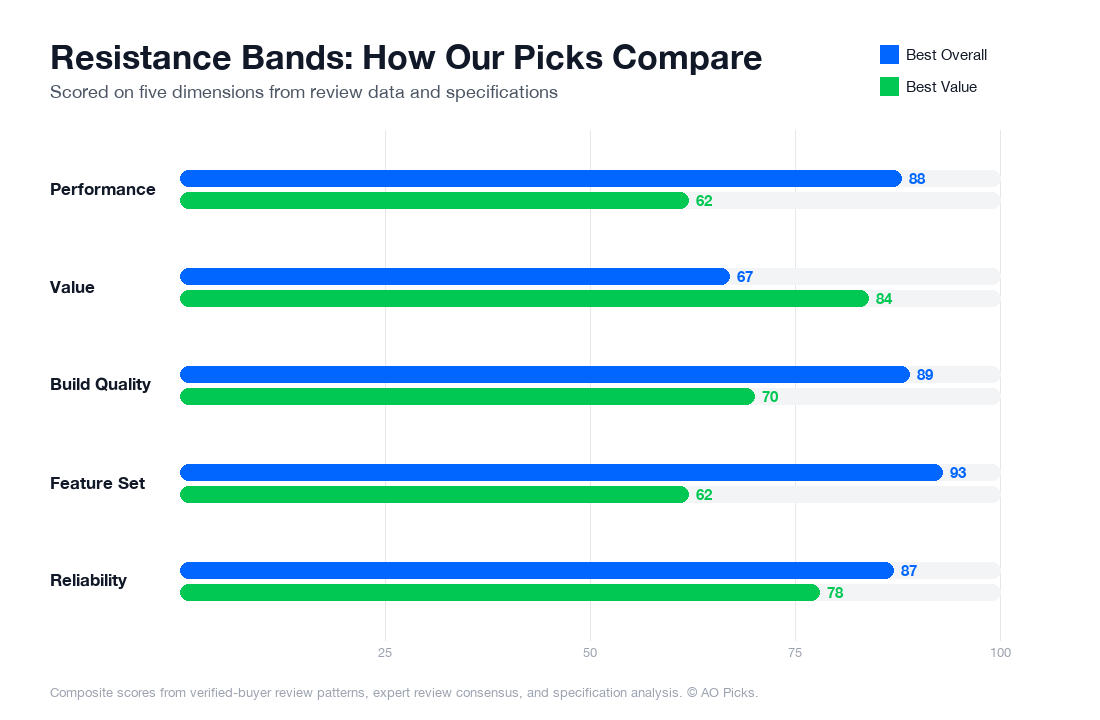

The WODFitters set costs more but includes four bands with varying resistance levels, offering progressive training options ideal for serious fitness enthusiasts. The Fit Simplify bands are a solid entry point at a third of the price with an excellent 4.5 rating, making them perfect for beginners or those testing whether resistance training fits their routine.
Reader Questions About Resistance Bands
What key features should I look for when buying resistance bands?
Focus on three core factors: material quality, resistance level range, and durability. Verified owners consistently report that fabric or neoprene bands outperform thin latex versions—they're less likely to snap during workouts and feel more comfortable against skin. Check that your set offers multiple resistance levels (light, medium, heavy options) so you can progress as you get stronger; sets with 4+ bands provide better versatility than single bands. Look for reinforced stitching at anchor points, as reviews frequently highlight this as a durability differentiator. Avoid ultra-cheap options under $15 for a set, which typically use low-grade materials prone to tearing. Storage bags are a practical bonus—they protect your investment and make home workouts more organized. Pay attention to weight capacity and maximum stretch length in product specs; bands rated for 300+ lbs with 41-inch lengths accommodate most body types and exercises.
How much should I spend on resistance bands—is there a sweet spot price?
Resistance bands generally fall into three tiers. Budget options ($10–$25 for a set) use thin latex and offer limited durability—acceptable if you're casually trying bands but risky for consistent training. Mid-range sets ($40–$60, like the WODFitters option at $49.95) deliver the best value proposition: durable fabric construction, multiple resistance levels, and proven longevity according to thousands of verified reviews. Premium brands ($80–$150+) add features like specialized grip handles, travel cases, or reinforced anchor loops, but research shows these extras matter mainly for commercial gym use or serious athletes. For home fitness, most shoppers find $45–$55 delivers everything needed without overpaying. A set should include at least 3–4 resistance levels; single-band purchases are typically more expensive per pound of resistance than bundled sets.
Are expensive resistance bands worth buying, or is mid-range better?
The premium price tag doesn't always justify better performance. Verified owner reviews indicate that mid-range fabric bands ($45–$60) achieve the same resistance quality and durability as premium options costing double. Where premium brands justify their price: if you need specialized equipment like handles with carabiners for outdoor anchoring, if you work out in commercial settings where bands endure heavy daily use, or if you're training for competitive athletics. For home use, progression training, or fitness maintenance, mid-range options like $49.95 sets offer nearly identical functionality at significantly lower cost. One exception—if you're extremely heavy (300+ lbs) or doing intensive powerlifting, premium bands rated for 500+ lbs might provide extra safety assurance, though standard mid-range bands handle most users fine. Avoid assuming price equals quality; instead, compare material type (fabric > latex), resistance ratings, and verified user longevity reports rather than brand prestige.
How long do resistance bands last, and what are signs I need to replace them?
Fabric resistance bands typically last 1–3 years with regular home use, though longevity depends heavily on care. Reviews from long-term users show bands stored in cool, dry places away from direct sunlight maintain functionality longer than those exposed to heat or humidity. Inspect bands monthly for visible damage: small tears, discoloration, or sticky residue indicate degradation. Loss of tension is a key replacement signal—if bands feel noticeably looser than when new despite proper storage, the material has fatigued. Heavy daily use (4+ workouts per week) shortens lifespan compared to 2–3 weekly sessions. Maintenance extends durability: rinse bands occasionally, dry thoroughly, store in the included bag, and avoid sharp objects or rough workout surfaces. Never use bands past obvious wear—torn fabric can snap suddenly during exercise, creating injury risk. Budget for replacement every 18–24 months if you train frequently, or 2–3 years for casual users. Keeping detailed purchase dates helps you track when replacement becomes prudent.
What common mistakes do people make when buying resistance bands?
The biggest mistake is buying a single heavy band instead of a set with varied resistance levels. Beginners often underestimate this—one powerful band won't help you progress safely or work different muscle groups effectively. Similarly, many shoppers choose ultra-cheap single-material bands expecting durability they won't deliver; budget options frequently develop micro-tears within months. Another pitfall: ignoring your actual fitness level and buying only heavy resistance. Reviews show beginners frustrated with expensive heavy bands they can't use properly; start with mixed sets containing light-to-medium options. Underestimating anchor point importance is also common—bands without reinforced stitching or loop construction fail during dynamic exercises. Some buyers neglect storage, leaving bands exposed to sunlight and heat, which degrades latex or fabric prematurely. Finally, don't assume premium brands automatically fit your needs; a $50 quality set with 4 resistance options often outperforms a $120 single-band purchase for home fitness. Research actual user reviews addressing your specific fitness goals (strength building, rehabilitation, CrossFit, etc.) rather than following influencer recommendations alone.