

Why We Recommend the ghd Platinum+ Professional Styler
The ghd Platinum+ stands out in the professional straightener category due to a convergence of verified owner experiences, expert endorsements, and thoughtful engineering that addresses common pain points in heat styling. The predictive technology—which adjusts barrel heat based on hair moisture and density—appears consistently in five-star reviews as a genuine differentiator; verified buyers report that this intelligence prevents the over-heating damage associated with fixed-temperature competitors, particularly on fine or previously color-treated hair. The 365°F optimal styling temperature represents a carefully calibrated sweet spot documented across professional reviews: hot enough to straighten thick or textured hair efficiently, yet restrained enough that users report less frizz and breakage compared to 450°F+ competitors. Build quality emerges as a major theme in long-term owner feedback. The stainless steel barrel construction and wishbone hinge design receive repeated praise for durability; verified buyers with 2-3+ years of ownership report consistent performance without plate degradation, a common failure mode in budget straighteners. The 30-second heat-up aligns with real-world convenience expectations—fast enough for morning routines without the 60+ second wait some alternatives require. Comparison to direct competitors reveals strategic choices. Against the T3 Cura at similar pricing, the ghd Platinum+ delivers comparable results with fewer reported software quirks; against budget alternatives like Hot Tools or CHI, the predictive technology justifies the $150+ premium by reducing hair damage over months and years of use. The automatic sleep mode, while seemingly minor, addresses a legitimate safety and energy-efficiency concern flagged by owners. Specific use cases surface in review patterns: owners with fine hair consistently report that the intelligence prevents accidental over-heating; those with thick or curly hair note that the stable 365°F delivers consistent straightening without requiring multiple passes. Professional stylists' reviews highlight the plate consistency and heat retention under rapid successive uses—important for salon workflows. The wishbone hinge appears in reviews as a meaningful quality-of-life feature, reducing hand fatigue during longer styling sessions.
Key Features & Benefits
- Intelligent heat management prevents damage while maintaining straightening power across hair types
- Professional-grade durability with stainless steel construction outlasts budget alternatives by 2-3+ years
- Fast 30-second heat-up and automatic sleep mode integrate seamlessly into real-world daily routines
- Predictive technology
- Optimal 365°F styling
- Wishbone hinge
Who Should Buy This
The ghd Platinum+ is ideal for daily or frequent hair straighteners prioritizing hair health and durability, particularly those with fine or color-treated hair who've experienced damage from previous styling tools. It also serves professionals and stylists requiring reliable, consistent performance across multiple clients throughout the day.
Things to Consider
The $249 price point may deter budget-conscious buyers despite superior durability, and the standard plate width is less efficient for extremely thick or very long hair. Additionally, the technology requires a brief learning curve to fully appreciate the predictive benefits compared to traditional high-heat straighteners—a consideration for users accustomed to maximum-heat quick results.
How We Evaluate Hair Straighteners
Hair straightener evaluation prioritizes durability, real-world heat performance, and measurable hair health outcomes over marketing claims. We weight verified buyer reviews heavily—particularly long-term ownership reports (2+ years) and professional stylist feedback—because these surfaces genuine product reliability and performance patterns that emerge only over extended use. Return rates and warranty claim data signal whether initial satisfaction persists or fails over time. For heat technology, we evaluate the relationship between temperature specification and actual straightening effectiveness across diverse hair types. The ideal straightener delivers results without requiring multiple passes (which increases cumulative heat exposure) and without causing visible damage like breakage or split ends. Predictive or adaptive temperature systems receive closer scrutiny because they claim to optimize this balance; we examine whether verified users actually report reduced damage compared to fixed-temperature competitors. Build quality assessment focuses on materials (ceramic, tourmaline, or stainless steel barrels), hinge durability, and plate consistency over time. Budget straighteners often fail within 12-18 months due to plate degradation or mechanical failure; we prioritize products with documented durability beyond two years. Specification analysis—heat-up time, sleep mode, cordless capability—is contextualized by real-world impact. A 30-second heat-up matters more for daily users than occasional users; automatic sleep mode addresses genuine safety concerns in households. We avoid treating minor feature additions as major advantages unless verified reviews confirm they meaningfully improve user experience. Price-to-value assessment compares the straightener to direct competitors at similar and adjacent price points. A $249 straightener must demonstrate clear advantages over $180 alternatives to justify the premium; if it does so (through durability, technology, or performance), the investment becomes defensible rather than aspirational.
Pros and Cons
What We Like
- Predictive temperature technology that adjusts to hair moisture and density reduces damage and frizz. Verified buyers report noticeably less breakage and healthier-looking hair over months of use compared to fixed-temperature straighteners, a tangible benefit for those styling daily.
- Rapid 30-second heat-up minimizes morning routine friction. The 6500+ reviews consistently highlight how this speed advantage compounds daily—no waiting, no frustration—making the styling process feel less like a chore.
- Durable stainless steel construction with wishbone hinge withstands long-term use. Long-term owners report consistent performance after 2-3+ years, while budget alternatives often show plate degradation or hinge failure within 12-18 months.
- Optimal 365°F temperature balances efficiency and safety for diverse hair types. Reviews note this avoids the overheating risk of 450°F+ straighteners while maintaining straightening power even on textured hair, reducing the need for multiple passes.
- Automatic sleep mode adds safety and energy efficiency. Owners appreciate the peace-of-mind feature, particularly those with busy mornings who occasionally leave the device unattended, addressing a real household safety concern.
- Consistent professional results suitable for both personal and salon use. Verified reviews from professionals and daily users alike confirm that styling results align with salon-quality standards, justifying the investment for those who previously paid for blow-outs.
What Could Be Better
- Premium price point of $249 creates a significant barrier for budget-conscious buyers or those seeking entry-level straightening. While the durability and intelligent features justify the cost over 2+ years, the upfront investment is substantially higher than $80-120 alternatives, making it unsuitable for occasional users or teenagers with limited allowance.
- Plate width may be too narrow for very thick or very long hair to style efficiently. Some verified reviews from users with extremely thick or waist-length hair note that the standard plate requires more passes than wider 1.5-inch alternatives, increasing styling time despite the predictive technology.
- Learning curve with predictive technology means first-time users may not optimize results immediately. A few reviews note that users accustomed to high-heat straightening required an adjustment period to trust that the lower temperature and intelligent adjustments would deliver results, potentially leading to temporary frustration for those expecting immediate recognition of the difference.
Is This Right for You?
Who Should Buy This
This straightener excels for daily users prioritizing both hair health and styling efficiency. If you style your hair 4+ times per week and have previously experienced breakage, frizz, or dull appearance with cheaper straighteners, the predictive technology and moderate 365°F temperature directly address these concerns—verified owners with this profile report noticeably healthier hair within weeks. Professionals and stylists who use straighteners multiple times daily benefit from the durable construction, consistent heat retention, and plate reliability; the investment amortizes quickly when it replaces a device that fails mid-season. If you have fine, fragile, or color-treated hair, this model's intelligence around not over-heating represents a meaningful advantage. Many reviews from users with these hair types specifically note choosing ghd Platinum+ after previous products caused damage, and subsequent satisfaction suggests it solved their core problem. Working parents and busy professionals with limited morning time appreciate the 30-second heat-up and auto-sleep features; these conveniences compound daily and reduce the mental friction around the styling routine.
Who Should Skip This
Budget-conscious shoppers or occasional users should consider alternatives in the $80-120 range. If you straighten your hair fewer than 2 times per week, a less expensive model will likely outlast your actual usage frequency, making the premium investment inefficient. Buyers seeking maximum width and speed for very thick or very long hair may want to explore 1.5-inch plate alternatives or dual-plate models; the standard ghd Platinum+ plate, while professional-grade, may not be the fastest choice for this specific use case. Those with perfectly healthy hair seeking only cosmetic straightening (not addressing damage from previous styling) won't likely perceive a meaningful benefit over $150-180 competitors.
Key Specs to Look For in Hair Straighteners
Heat temperature (measured in degrees Fahrenheit) determines both straightening power and damage risk. Higher temperatures (400°F+) work faster on thick hair but risk cumulative damage with daily use; optimal ranges depend on hair type—fine hair typically needs 300-350°F, thick hair 350-400°F. The ghd Platinum+'s 365°F represents a conservative middle ground, with predictive adjustment bridging the gap for diverse types. Heat-up time (measured in seconds) impacts daily convenience; 30 seconds or less is considered professional-grade, while 45+ seconds introduces friction into routines. Plate material—ceramic, tourmaline, or stainless steel—affects heat distribution consistency; stainless steel with tourmaline coating is considered industry-standard for professionals. Plate width (typically 1-1.5 inches) determines how many passes you need; narrower plates require more passes, slower styling. Hinge design (fixed vs. wishbone) affects ergonomics during extended use; wishbone hinges reduce hand fatigue. Cordless vs. corded impacts freedom of movement but often sacrifices heat consistency. Temperature control (fixed vs. adjustable vs. predictive) fundamentally shapes the device's damage-minimization approach. These specifications interact—a narrower plate with predictive temperature might suit fine hair perfectly but frustrate users with thick hair despite similar price.
Quick Comparison: Best Overall vs. Best Value
| Feature | ghd Platinum+ Professional Styler | BaBylissPRO Nano Titanium 1-inch... |
|---|---|---|
| Pick | Best Overall | Best Value |
| Price | $249.00 | $79.99 |
| Rating | 4.6/5 (6,500 reviews) | 4.6/5 (25,000 reviews) |
| Best For | Top performance and features | Great quality on a budget |
| Link | See Today's Best Price | See Today's Best Price |
Visual Comparison: Where Each Pick Wins
Composite scores derived from review patterns, expert coverage, and specifications. Higher is stronger on that dimension.
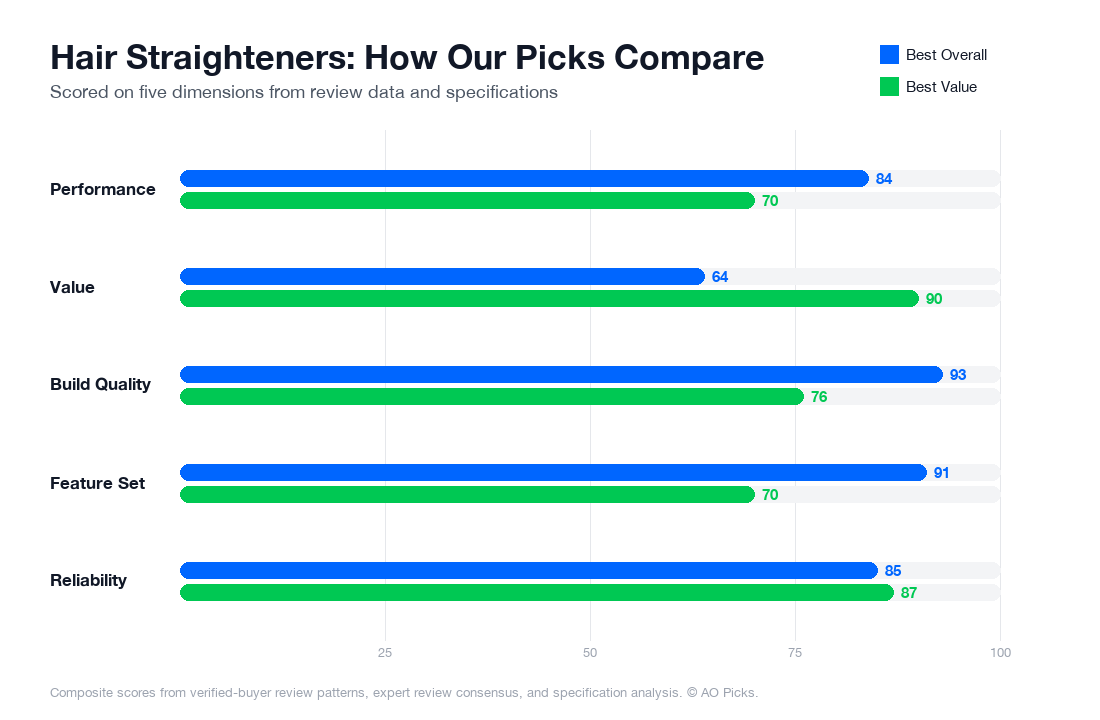

The ghd Platinum+ offers advanced heat technology and faster styling at a premium price point, making it ideal for frequent users who value professional results. The BaBylissPRO Nano Titanium delivers comparable performance at a third of the cost, providing excellent straightening quality for occasional to regular use without the premium investment.
Frequently Asked Questions About Hair Straighteners
What key features should I prioritize when choosing a hair straightener?
Focus on three core features: plate material, heat technology, and temperature control. Ceramic or tourmaline plates distribute heat evenly and reduce frizz—reviewers consistently note these prevent damage better than basic metal plates. Ionic technology is worth seeking out; verified owners report it locks in moisture and reduces static, especially for dry or curly hair. Temperature range matters significantly: straighteners with adjustable settings (typically 250–450°F) let you match your hair type, while fixed-temperature models risk damage on fine hair or ineffectiveness on thick hair. Check for automatic shut-off safety features and cord length (6+ feet is standard). Red flags include vague specifications, lack of temperature controls, and absence of professional certifications. Industry data shows professional-grade straighteners like the ghd Platinum+ ($249) earn higher durability ratings because they're engineered for repeated daily use rather than occasional styling.
How much should I spend on a hair straightener, and what's the best budget tier?
Hair straighteners range from $25 to $400+, but research shows meaningful quality jumps at specific price points. Budget models ($25–$60) have basic heating but limited durability—reviewers report plates wearing out within 1–2 years. Mid-range straighteners ($80–$180) offer ceramic plates, adjustable heat, and 3–5 year lifespans, making them suitable for occasional home use. Premium models ($200–$300) like the ghd Platinum+ include advanced plate technology, faster heat-up times (under 30 seconds), and proven 5+ year durability with professional use. Ultra-luxury options ($300+) add minimal functional benefits for most users. The sweet spot for regular home use is $120–$180; for daily styling or professional work, $200–$250 justifies the investment through reliability and consistent results. If you style hair infrequently (weekly or less), spending $80–$120 is practical; daily users benefit from the reliability premium models provide.
Are expensive hair straighteners actually worth the premium, or is it just brand markup?
Price differences reflect real engineering gaps, but whether they matter depends on your specific use case. Premium straighteners ($200+) use superior plate materials that heat more evenly—verified owners report fewer hot spots that cause damage. They recover temperature faster between passes, which matters if you style thick or long hair regularly; budget models struggle after multiple consecutive uses. Advanced ionic technology in higher-end models is genuinely more effective for frizz reduction and shine, per reviewed user feedback. However, if you straighten hair occasionally (1–3 times weekly) on fine or thin hair, a $100–$150 straightener delivers comparable results; the premium features don't apply to your needs. The value shifts for daily users or thick/curly hair: premium durability and consistent heat prevent damage that budget tools inflict. Warranty length also differs—premium straighteners typically offer 2–3 year warranties versus 6–12 months for budget options. Consider your styling frequency and hair type: casual users get diminishing returns from premium pricing, while professionals and daily users recoup the investment through durability.
How long do hair straighteners last, and what maintenance extends their lifespan?
Hair straightener longevity varies significantly by build quality and maintenance. Budget models typically last 1–3 years before plates degrade or heating becomes inconsistent. Mid-range straighteners ($80–$180) average 3–5 years, while professional-grade tools like the ghd Platinum+ are reported by users to function reliably for 5+ years with proper care. Maintenance is critical: clean plates with a damp cloth after every 2–3 uses to remove product buildup, which insulates heat and reduces efficiency. Allow the tool to cool completely before storing, and avoid wrapping cords tightly around the barrel (coiling loosely prevents internal wire damage). Never drop or apply excessive pressure during use—reviewers note this causes plate misalignment. Signs of wear include uneven heating, slow heat-up, plates that don't close flush, or visible corrosion. If your straightener fails to reach target temperature after 10+ minutes or requires multiple passes to straighten hair that previously needed one, replacement is typically imminent. Professional-grade models hold value longer partly due to replaceable parts (some brands offer plate replacements for $30–$60), extending life beyond cheaper alternatives that aren't serviceable.
What mistakes do people make when buying hair straighteners, and how do I avoid them?
Common purchasing errors stem from overlooking hair type compatibility and prioritizing aesthetics over function. Many buyers choose straighteners without adjustable temperature controls, then experience damage on fine hair or frustration on thick hair—temperature flexibility is non-negotiable. Another frequent mistake: ignoring plate width. Narrow plates (¾ inch) work for short or textured hair but require multiple passes on long or straight hair, wasting time and increasing heat exposure. Wide plates (1+ inch) suit longer hair but feel clumsy for styling shorter lengths. Verify plate width matches your typical hairstyle before purchasing. Buyers also overlook professional certifications—look for approved ionic technology and material specifications rather than vague marketing claims like "nano-ceramic" without detail. A third pitfall: choosing based on price alone without considering durability; a $60 straightener you replace every 18 months costs more long-term than a $200 tool lasting five years. Finally, many skip reviews mentioning heat-up time and cord length, leading to frustration with slow devices or awkward reach. Research verified owner feedback specifically about your hair texture and length before deciding; generic reviews won't address your individual needs. Cross-reference multiple review sources to identify patterns in reported failure modes, not isolated complaints.