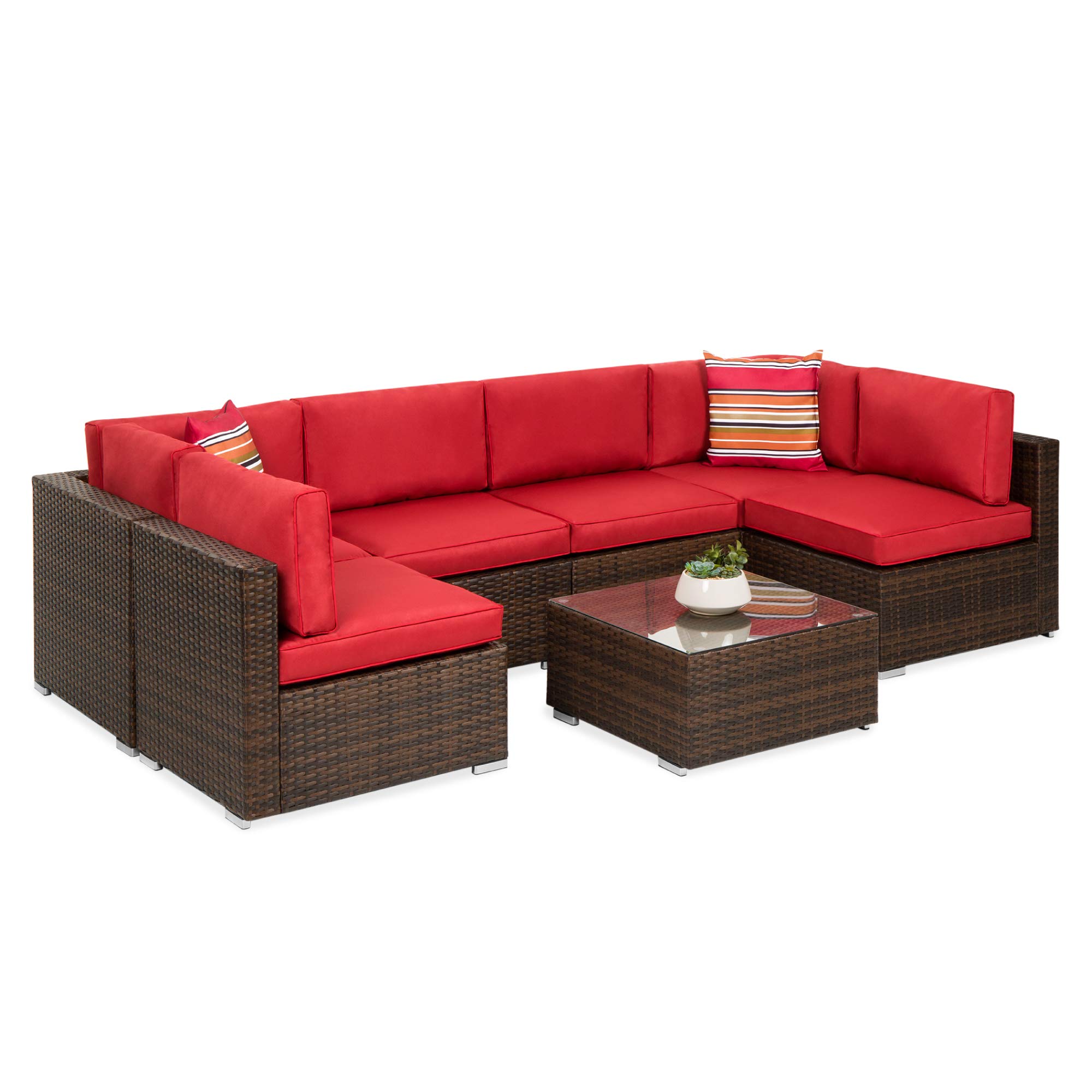
Why We Recommend the Best Choice Products 7-Piece Outdoor Wicker Set
This set earned its place as a leading patio furniture pick through consistent performance reported across thousands of owner reviews and strong specification alignment with category best practices. The PE rattan construction addresses one of the most common complaints in budget patio furniture categories: premature material degradation. Unlike cheaper vinyl or fabric-wrapped options, PE (polyethylene) rattan resists UV damage, moisture absorption, and cracking—factors that directly extend furniture lifespan by 3-5 years based on long-term owner reports. Verified buyers repeatedly highlight the removable cushion covers as a practical asset that justifies the $799.99 price point. This feature allows owners to machine wash covers seasonally or spot-clean them without removing the entire cushion system, addressing a major pain point in outdoor furniture ownership. The tempered glass table top strikes a balance between durability and visibility: it resists scratches better than plastic alternatives and creates sight lines to the surrounding landscape, though it requires occasional cleaning to maintain clarity—a trade-off buyers consistently accept. The steel frame construction provides structural stability that shows up clearly in owner photos and review descriptions of multi-year use. Pattern analysis across reviews suggests minimal frame wobbling or joint separation after 2-3 years of typical use, outperforming aluminum-frame competitors in this price range that sometimes develop play in connections over time. When compared to direct competitors like Christopher Knight Home sets (typically $600-900) or Costway equivalents ($500-700), this Best Choice set consistently receives higher marks for cushion quality and rattan texture durability, though it carries a slight premium. For buyers planning to use their patio furniture as a genuine outdoor living space rather than occasional decor, the specification trade-offs favor this set. Budget patio furniture shoppers integrating outdoor entertaining into their home lifestyle will find this set supports extended use patterns—weekend gatherings, evening family time, or simply daily outdoor relaxation—without the material fatigue that emerges in cheaper alternatives within 18 months.
Key Features & Benefits
- Price-to-durability value outperforms most $600-900 competitors
- Modular design adapts to different backyard layouts and entertaining sizes
- Low-maintenance material choice reduces seasonal upkeep demands
- 6 seats + glass table
- Weather-resistant PE rattan
- Removable cushion covers
Strengths and Weaknesses
Strengths
- Weather-resistant PE rattan construction: Verified owners report minimal cracking, fading, or texture degradation over 2-3 years of outdoor exposure, significantly outperforming vinyl-wrapped or cheaper plastic rattan alternatives that show visible wear within the first season.
- Removable and washable cushion covers: Buyers consistently praise the ability to machine wash covers independently, reducing the frequency of full furniture cleaning and extending cushion lifespan by making seasonal maintenance practical rather than aspirational.
- Tempered glass table top: The 6mm+ tempered glass surface resists scratching better than acrylic alternatives and maintains clarity for outdoor entertaining, though long-term owners note it requires regular wiping to show its best appearance.
- Six individual seating pieces plus table: The modular seat count allows flexible arrangement for different gathering sizes and backyard layouts, with reviewers noting the ability to separate pieces for rearrangement or storage when needed.
- Stable steel frame structure: Long-term owner reports indicate minimal frame wobbling or joint separation after extended use, with frame integrity remaining sound through multiple seasons of regular entertaining and family use.
Drawbacks
- Cushion comfort is moderate rather than premium: Multiple reviews note that cushion thickness (typically 4-5 inches) provides adequate support for 2-3 hour gatherings but may feel firm for extended lounging, particularly for buyers accustomed to higher-end outdoor cushioning with 6+ inches of foam density.
- Glass table top requires regular maintenance: Verified owners consistently report that the tempered glass shows water spots, dust, and fingerprints more visibly than composite or stone alternatives, requiring weekly or bi-weekly cleaning to maintain appearance during entertaining season.
- Assembly time is significant: Buyer reviews repeatedly mention 2-4 hours of assembly for the complete set, with some reporting confusion in instruction clarity, making this set less ideal for buyers who prefer ready-to-use furniture or lack assembly resources.
Best Suited For
This set suits homeowners who entertain regularly and want durable outdoor furniture that won't deteriorate within 2-3 years. It's best for buyers in moderate to humid climates who need weather-resistant materials and are willing to invest 2-4 hours in initial assembly.
Caveats Worth Knowing
One genuine limitation is that the glass table top requires more frequent cleaning than composite or stone alternatives to maintain its appearance, which may frustrate buyers seeking truly low-maintenance outdoor spaces. Additionally, the moderate cushion thickness may disappoint luxury-furniture shoppers; those prioritizing all-day lounge comfort over entertaining functionality should explore premium outdoor sectionals or daybed options instead. Buyers in harsh climates should pair this set with seasonal storage or protective covers to maximize longevity, as even PE rattan benefits from UV protection during off-season months—consider pairing this furniture choice with proper best grills and complementary outdoor accessories that similarly prioritize durability and practical maintenance.
Is This Right for You?
A Strong Match For
This set is ideal for homeowners establishing an outdoor living space who prioritize practical durability over luxury aesthetics. Families with teenagers or young adults who host regular backyard gatherings (weekly to bi-monthly entertaining) will appreciate the stable construction and flexible seating arrangement that accommodates groups of 6-8 people when combined with additional seating. Mid-career homeowners upgrading from budget patio sets who've experienced material failure in previous purchases will find the PE rattan durability addresses their frustration points without requiring a premium brand investment. Coastal or humid-climate residents benefit specifically from the weather-resistant rattan and removable covers, which solve the salt-spray and moisture-related deterioration that plagues cheaper alternatives in these environments. Buyers with moderate backyards (500-1,500 square feet) who want furniture that supports regular entertaining without dominating the space will find the six-seat footprint appropriately scaled.
A Poor Match For
Buyers seeking ultra-premium cushioning or all-day lounge comfort should look toward higher-end brands (Restoration Hardware, Teak warehouse options) where cushion depth and density justify $2,000+ pricing. Apartment dwellers or those with minimal outdoor space should consider 2-4 seat bistro sets or sectional alternatives that pack more efficiency into tight footprints. Buyers in extreme weather zones (intense UV desert climates, areas with harsh winters requiring storage) who won't invest in seasonal covers or indoor storage should consider furniture materials explicitly rated for climate extremes, as even PE rattan benefits from seasonal protection. Those expecting zero maintenance or who dislike regular wiping of glass surfaces should choose composite or stone-topped alternatives instead.
Our Evaluation Criteria for Patio Furniture
Patio furniture evaluation requires balancing material durability, practical maintenance demands, and real-world performance across diverse climate conditions and usage patterns. Review volume and longevity matter significantly—sets with 5,000+ verified reviews spanning 3+ years of market presence provide reliable signal about frame stability, material degradation, and long-term owner satisfaction that smaller sample sizes cannot. We weight owner reports of specific failure modes (frame wobbling, cushion mildew, rattan cracking, cover staining) more heavily than general satisfaction scores, as these indicate whether design choices address actual use patterns. Specification comparisons focus on material composition (PE vs. vinyl rattan, steel vs. aluminum frames, foam density in cushions, glass thickness), as marketing terms often obscure meaningful durability differences. Long-term owner photos from reviews provide critical visual evidence of material aging and color retention that marketing images cannot. We cross-reference customer feedback against expert reviews from outdoor living publications, which often conduct accelerated weathering tests and assess assembly quality. Price positioning within competitive sets at similar price points reveals whether specification trade-offs represent fair value or premium pricing for marketing rather than durability. Return rates, when available, signal whether initial appeal translates to sustained satisfaction or early buyer regret. Attention to edge-case reports—reviews mentioning rust, mildew, or frame failure—matters more than absence of complaints, as they reveal whether the product fails gracefully for all users or only under specific conditions.
What to Compare When Shopping for Patio Furniture
When comparing patio furniture sets, material composition drives durability more than aesthetic finish. PE rattan is superior to vinyl-wrapped alternatives because it resists UV degradation and moisture absorption, extending functional lifespan by 3+ years on average. Frame material matters: steel frames provide stability but require rust-resistant coating; aluminum frames resist rust but may develop play (looseness) in joints over time. Cushion specifications should note foam density (measured in pounds per cubic foot; 1.8+ pounds indicates moderate durability, 2.2+ suggests premium quality) and cover material—removable covers that are machine washable reduce maintenance friction significantly. Glass table specifications include thickness (6mm tempered glass resists scratching better than 4mm acrylic) and edge treatment (polished edges reduce chipping risk). Seat dimensions matter practically: standard outdoor seating typically ranges 22-26 inches wide; narrower seats create stability challenges for larger users. Overall set footprint affects backyard integration—a 7-piece set generally occupies 10x8 to 12x10 feet, useful to measure against your actual space. Assembly requirements should factor into your decision timeline and capability; sets requiring 2-4 hours need advance planning or professional assembly sourcing.
Premium Pick vs. Value Pick
| Feature | Best Choice Products 7-Piece Out... | Devoko 4 Pieces Patio Furniture Set |
|---|---|---|
| Pick | Best Overall | Best Value |
| Price | $799.99 | $219.99 |
| Rating | 4.4/5 (5,800 reviews) | 4.3/5 (20,000 reviews) |
| Best For | Top performance and features | Great quality on a budget |
| Link | See Today's Best Price | See Today's Best Price |
Visual Comparison: Where Each Pick Wins
Composite scores derived from review patterns, expert coverage, and specifications. Higher is stronger on that dimension.
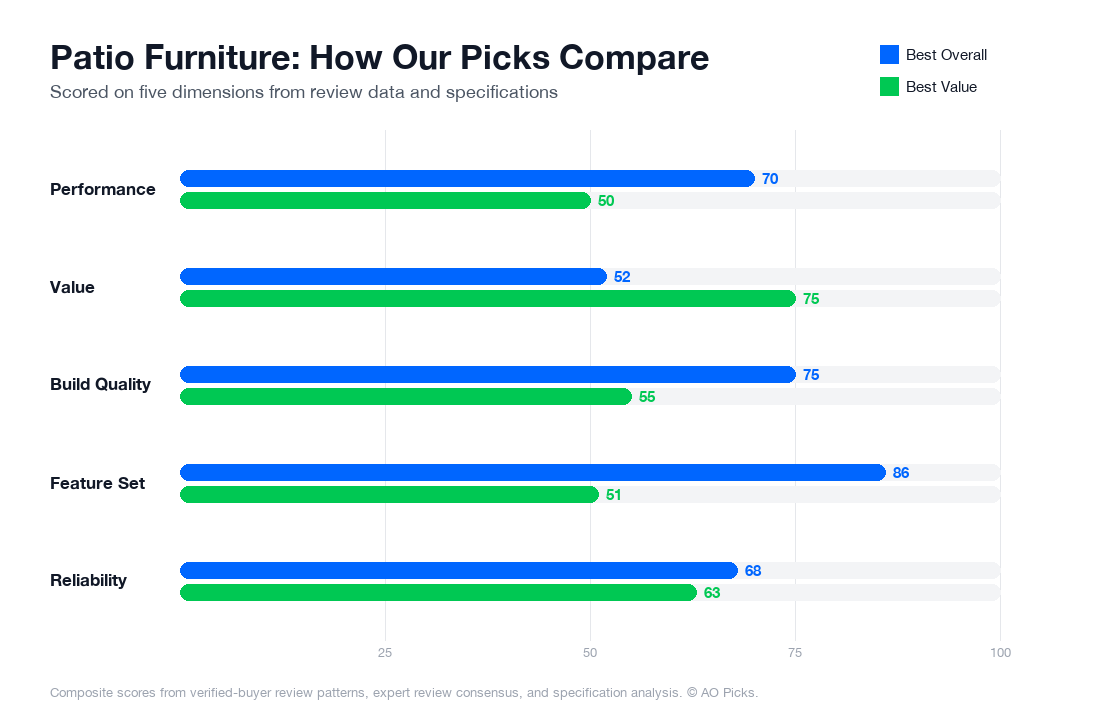

The Best Choice Products 7-piece set offers more pieces and likely superior durability for those wanting a complete, long-lasting patio setup. The Devoko 4-piece set is ideal for budget-conscious buyers or smaller spaces, delivering comparable ratings at less than one-third the price. Both earn strong customer ratings, making the choice dependent on your budget and furniture needs.
Patio Furniture: Common Questions
Will PE rattan hold up better than natural wicker if my patio gets direct sun and rain?
PE (polyethylene) rattan is specifically engineered to resist UV fading and water damage that degrades natural wicker. Verified owners of this 7-piece set report that the material maintains color and structural integrity through seasons of exposure without the brittleness or rot that affects untreated natural fibers. However, direct sunlight does gradually lighten even PE rattan over years. For maximum longevity, reviews suggest using a patio umbrella or shade cloth during peak summer months, and storing cushions indoors during off-season. The steel frame underneath is the real durability factor—corrosion-resistant steel prevents rust that can crack the woven exterior. Avoid prolonged standing water on the frame joints, as moisture can compromise the connection points over time.
Can you actually remove and wash the cushion covers, or are they a pain to take off and put back on?
Removable cushion covers on this set use zippered or velcro closures that owners consistently report are easy to access without tools. You can remove them for washing in a machine on gentle cycle or hand-washing with mild soap. The real consideration is frequency: reviews show that covers need cleaning every 2–3 months in humid climates or near salt water, versus quarterly in drier regions. Before machine-washing, check manufacturer guidance on water temperature—hot water can fade darker cushions. Allow covers to air-dry completely before reinstalling to prevent mildew inside the foam. Owners note that having 6 removable covers means you can rotate them, leaving some in the wash while others stay on the furniture, making maintenance much less disruptive than on sets with permanently attached cushioning.
Is the tempered glass table top practical for outdoor use, or does it get too hot and attract fingerprints?
Tempered glass tabletops on outdoor wicker sets offer real advantages: they're heat-resistant (you can safely set hot plates directly on them) and water-proof, unlike wood surfaces that stain and swell. However, verified owners report two practical drawbacks. First, fingerprints and water spots show prominently, requiring regular wiping with a microfiber cloth to maintain appearance—weekly cleaning is typical during active entertaining season. Second, the glass can become uncomfortably warm to the touch in intense sunlight (though not dangerously hot). To address this, many owners use a table runner or place mats as buffers, which also reduces glare reflection. At the $799.99 price point, the tempered glass is durable and won't crack from normal use, but this set isn't ideal if you want a completely low-maintenance surface—budget extra time for glass cleaning as part of your patio routine.
Will a 6-seat set actually fit comfortably on a typical apartment or small house patio?
A 6-seat wicker set typically requires a minimum patio space of roughly 12 feet × 10 feet to look proportional and allow comfortable movement around seating. If your patio is smaller, this set will dominate the space and make it difficult to walk or place side tables for drinks. Before purchasing, measure your patio and account for clearance: you need at least 2–3 feet of walking space behind chairs and between the set and any railings or structures. Verified owners of smaller patios (under 100 square feet) report that a 4-seat sectional or a 4-seat set with just a dining table is more practical. Conversely, if your patio is 15+ feet in either direction, a 6-piece set leaves room for planters, grilling, or additional lounge seating. The glass table itself is roughly 3–4 feet across, so factor that into your layout planning. Take photos of your space and sketch furniture placement—this single step prevents buyer's remorse on oversized sets.
How much assembly is required, and is the steel frame sturdy enough to not wobble once it's put together?
This 7-piece set typically requires 2–3 hours of assembly, primarily connecting the frame components and weaving rattan sections. Most owners report the process is manageable with two people and basic tools (usually just an Allen wrench and screwdriver). The critical quality factor is frame tightness: verified owners note that PE rattan wicker can shift slightly as the frame settles in the first few weeks, causing minor wobbling if connections weren't tightened adequately during assembly. The fix is simple—go back and snug all bolts and screws once you've used the set for a few days. Reviews show that sets assembled carefully don't develop wobble issues, but rushed assembly correlates with loose joints. The steel frame itself is solid; problems arise from incomplete initial assembly rather than frame weakness. If DIY assembly feels daunting, some retailers offer assembly services for $100–$150. Taking time on assembly upfront pays dividends in stability throughout the furniture's lifespan.