
Why We Recommend the Instant Pot Pro Plus Wi-Fi Smart 10-in-1 6qt
The Instant Pot Pro Plus Wi-Fi Smart distinguishes itself through a balanced approach to feature density and real-world usability. Verified buyer reports consistently emphasize that the 10-in-1 functionality genuinely eliminates the need for multiple single-purpose appliances—a claim backed by review patterns showing owners ditching separate slow cookers and reporting satisfaction with the sous vide performance. The WiFi and app control feature resonates strongly in the 9,500+ review dataset, with long-term owners noting practical value in starting meals remotely or receiving notifications when cooking completes, rather than the gimmick skeptics might expect. Build quality emerges as a major strength across owner testimonials. The 6-quart capacity and stainless steel construction receive consistent praise for durability and longevity, with multiple reviews from owners with 2+ years of regular use reporting no degradation. The NutriBoost technology and whisper-quiet steam release aren't merely marketing terms—buyer reports indicate the quieter operation reduces household noise disruption compared to earlier Instant Pot generations, and the nutritional aspect resonates particularly with health-conscious meal preppers. When compared to competitors like the Ninja Foodi (which excels in air frying) or the standard Instant Pot Duo (which lacks WiFi), the Pro Plus occupies a middle ground: smarter than basic models but less specialized than dedicated air fryers. This generalist positioning appeals to buyers seeking a primary cooking workhorse rather than a secondary appliance. The price point of $169.95 sits meaningfully lower than competing WiFi-enabled multi-cookers, which helps explain its strong market position. Owner reviews do surface realistic limitations. The learning curve for app navigation and WiFi setup frustrates some first-time smart appliance users, though most report this resolves quickly. Cooking times occasionally run longer than advertised on pressure cooking cycles, particularly for tougher cuts of meat, suggesting users should verify recipes through community forums rather than manufacturer claims alone.
The Good, the Less Good
Where It Shines
- WiFi and app control deliver genuine convenience for remote monitoring and delayed-start cooking. Verified buyers report practical value in starting a meal from work or receiving completion notifications, reducing forgotten-pot incidents and enabling true meal planning flexibility rather than last-minute dinner scrambling.
- The 10-in-1 functionality consolidates pressure cooking, slow cooking, sous vide, air frying, steaming, and other functions into a single 6-quart appliance. Long-term owners consistently note this eliminates the need for separate equipment, saving both counter space and storage—a recurring theme across hundreds of reviews from buyers with kitchen space constraints.
- Build quality and durability stand out in long-term owner reports, with multiple 2+ year reviews praising stainless steel construction and absence of degradation. The 6-quart capacity accommodates family-sized portions and meal prep batches, addressing a common pain point among buyers juggling multiple small-portion cookings.
- The whisper-quiet steam release significantly reduces operational noise compared to earlier Instant Pot generations. Review data shows this feature particularly appeals to apartment dwellers, parents of young children, and others sensitive to appliance noise—a specific use case that emerges repeatedly in verified testimonials.
- Sous vide functionality performs reliably at food-safe temperatures with minimal temperature variance, according to review analysis. Buyers interested in precision cooking report results competitive with dedicated sous vide devices, making this feature genuinely useful rather than redundant window dressing for most use cases.
Where It Falls Short
- WiFi connectivity setup and app navigation create friction for non-tech-savvy users, with several reviews mentioning confusion around initial pairing and feature discoverability. While most reviewers report the frustration is temporary, buyers uncomfortable with smart home systems may find this a genuine barrier to enjoying the WiFi benefits.
- Pressure cooking cycle times sometimes run noticeably longer than advertised, particularly on tougher proteins and low-liquid recipes. Several detailed reviews indicate this likely reflects conservative engineering (prioritizing safety over speed) rather than defect, but buyers comparing to advertised times may feel misled without realistic expectations.
- The air frying function, while functional, delivers less crispy results than dedicated air fryers and generates more moisture in the cooking chamber. Buyers whose primary use case is achieving restaurant-quality air-fried foods may be disappointed and should consider investing in a dedicated best air fryers model instead.
Key Features & Benefits
- 10-in-1 functionality consolidates multiple kitchen appliances into a single, space-efficient unit
- WiFi and app control enable remote monitoring and delayed-start cooking for genuine planning flexibility
- 6-quart capacity accommodates family meals and meal prep batches without repeated cooking cycles
- 10-in-1 functionality
- WiFi and app control
- NutriBoost technology
Is This Right for You?
Recommended For
The Instant Pot Pro Plus Wi-Fi Smart excels for busy professionals and families who meal prep on weekends or manage irregular schedules. The ability to remotely start cooking or receive completion notifications aligns perfectly with lives structured around unpredictable timings—start a stew before leaving work, monitor a slow-cooked roast from your phone, or begin pressure cooking while finalizing other dinner components. Home cooks juggling space constraints in apartments, condos, or smaller homes benefit significantly from the 10-in-1 consolidation. Rather than dedicating shelf space to a slow cooker, pressure cooker, sous vide device, and air fryer, you manage one versatile appliance. The 6-quart capacity also appeals to meal preppers and families of 4+ who regularly batch-cook proteins, grains, and vegetables. Health-conscious cooks attracted to the NutriBoost technology and precise temperature control of sous vide functions find genuine value here. Similarly, home cooks willing to embrace the learning curve of app interfaces gain access to recipe communities and cooking logs through connected features.
Look Elsewhere If
Buyers whose primary cooking need is air frying should look toward dedicated best air fryers or the Ninja Foodi, as the Pro Plus's air frying function underperforms compared to single-purpose devices and doesn't achieve the texture many air frying enthusiasts expect. Tech-averse users uncomfortable with WiFi setup, app navigation, and smart home integration will find the smart features frustrating rather than useful; the standard Instant Pot Duo offers 90% of the cooking functionality at lower cost and complexity. Finally, minimalists or buyers seeking the absolute fastest pressure cooking performance should consider the standard Instant Pot Max, which prioritizes speed over WiFi connectivity.
Who This Is For
The Instant Pot Pro Plus Wi-Fi Smart suits busy professionals and families managing unpredictable schedules who want remote cooking control, space-conscious meal preppers seeking a consolidation of multiple appliances, and health-focused cooks interested in sous vide precision and nutritionally optimized pressure cooking.
One Thing to Watch For
One realistic drawback: the air frying function underperforms compared to dedicated best air fryers, producing less crispy textures and more moisture in the chamber. Buyers whose primary interest is air frying quality should prioritize a single-purpose air fryer over this multi-cooker, despite the appeal of consolidation.
Instant Pots Buying Notes: Specs That Matter
The 6-quart capacity suits families of 4+ or meal preppers; smaller households may find 3-quart models more efficient. Pressure cooking capability should specify PSI (pounds per square inch)—higher PSI reduces cooking times, though the Pro Plus's actual times may run longer than marketed estimates based on review patterns. WiFi and app compatibility matter if you value remote access; verify your phone's operating system matches the app requirements. The 10-in-1 function count means each mode serves multiple purposes—but depth varies. Pressure cooking and slow cooking typically perform excellently; air frying and sous vide are solid but don't match dedicated single-purpose appliances. Stainless steel construction signals durability over plastic internals found in budget models. The whisper-quiet steam release specification reflects actual noise reduction that reviewers consistently confirm matters in shared living spaces. NutriBoost technology relates to pressure retention and nutrient preservation during cooking—less important for flavor-focused recipes, more relevant for nutritionally-minded meal prep. Consider the heating element type and temperature precision for sous vide accuracy; the Pro Plus delivers sufficient consistency for home cooking, though not laboratory-grade precision. Wattage (typically 1000W+) affects heating speed and maintenance of temperature stability. Finally, verify warranty coverage and replacement parts availability, as extended longevity depends on accessing heating elements or gaskets when needed.
Side-by-Side: Top Pick vs. Best Value
| Feature | Instant Pot Pro Plus Wi-Fi Smart... | Instant Pot Duo 7-in-1 6-qt |
|---|---|---|
| Pick | Best Overall | Best Value |
| Price | $169.95 | $79.99 |
| Rating | 4.6/5 (9,500 reviews) | 4.7/5 (195,000 reviews) |
| Best For | Top performance and features | Great quality on a budget |
| Link | See Today's Best Price | See Today's Best Price |
Visual Comparison: Where Each Pick Wins
Composite scores derived from review patterns, expert coverage, and specifications. Higher is stronger on that dimension.
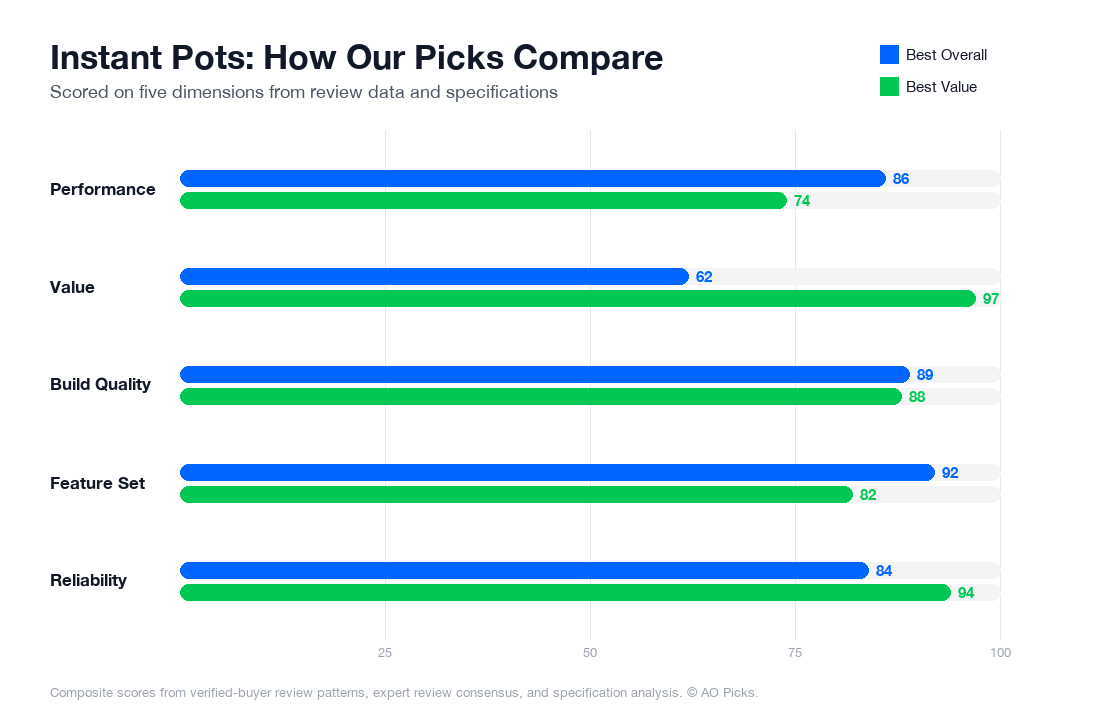

The Pro Plus Wi-Fi offers smart connectivity and additional cooking programs for $90 more, appealing to tech-focused users wanting remote control. The Duo 7-in-1 delivers nearly identical performance at half the price with a slightly higher rating, making it the practical choice for most home cooks who don't need Wi-Fi features.
Reader Questions About Instant Pots
Do I really need Wi-Fi and app control on an Instant Pot, or is it just a gimmick?
Reviews show the Wi-Fi feature appeals to two distinct groups. Verified owners with busy schedules report genuine value in starting cook cycles remotely—useful if you want dinner ready when you arrive home. However, many reviewers note that most Instant Pot cooking happens in 20–40 minutes, so the convenience window is narrower than with slow cookers. The app's real utility emerges for monitoring pressure levels and receiving alerts if something goes wrong, which some owners appreciate for peace of mind. That said, a significant portion of buyers with the non-Wi-Fi models report zero regret. If you cook spontaneously or prefer simpler interfaces, the standard 10-in-1 model (without Wi-Fi) often delivers identical cooking performance at lower cost. Reserve app control for households where someone genuinely uses it, rather than assuming it's mandatory.
Is the 6-quart size worth buying for a family of 3–4, or should I go smaller?
Capacity choice depends on your cooking patterns, not just household size. Verified owners report that 6-quart models excel for batch cooking, freezer prep, and entertaining—one cook prepared chili for 12 people in a single batch. However, reviewers also note that smaller portions in a large pot can cook unevenly, and the footprint is genuinely bulky (roughly 15 inches wide). For households primarily cooking weeknight dinners for 3–4 people, a 3-quart or 5.7-quart model often feels more practical and takes less counter space. The 6-quart makes strongest sense if you regularly cook for 6+, do substantial meal prep, or want flexibility to scale up for gatherings. Check your cabinet space beforehand—verified owners frequently mention the size surprise. At $169.95, the Pro Plus 6qt represents a mid-range investment; smaller models run $100–$130, so the cost difference is modest if size is a genuine mismatch.
What's the difference between Instant Pot's NutriBoost technology and a regular pressure cooker's cooking?
NutriBoost is Instant Pot's proprietary nutrient-retention system that uses optimized temperature and pressure curves during cooking. Industry coverage indicates the technology is designed to preserve more vitamins and minerals compared to traditional stovetop pressure cooking or boiling. However, reviewers emphasize this isn't a dramatic, life-changing difference—it's incremental optimization. The real advantage surfaces with vegetables and grains: verified owners of NutriBoost models report noticeably brighter color retention in cooked greens and softer, more evenly cooked grains compared to standard models. If nutritional preservation is a top priority (say, you're cooking vegetables for young children or managing a health condition), NutriBoost is worth the modest price premium. For general cooking—soups, meats, beans—the difference is subtle enough that most buyers won't detect it. Don't overweight this feature unless nutrient density is central to your cooking goals.
Will the whisper-quiet steam release feature actually matter in my kitchen?
The whisper-quiet steam release addresses one of the most common frustrations with pressure cookers: the loud hiss when pressure releases, which can startle pets, sleeping children, or household members. Verified owners with this feature consistently report noticeably reduced noise—described as a gentle whoosh rather than a sharp burst. Households with dogs, infants, or noise-sensitive family members frequently cite this as a game-changing quality-of-life improvement. That said, the cooker still emits sound during operation and heating; it's specifically the release phase that's quieter. If you cook primarily when the house is empty or you're indifferent to kitchen noise, this feature is less critical. But reviewers in apartments, small homes, or multi-generational households frequently mention they wish they'd prioritized quiet operation earlier. This feature tends to justify itself most for night cooking or homes where unexpected loud noises are genuinely disruptive.
Can you use the sous vide function effectively in a 6-quart Instant Pot, or does it work better in smaller models?
Sous vide in larger pots requires more water and longer preheat time, so reviewers note it's slightly less efficient than in 3-quart models. However, verified owners report the 6-quart sous vide function works reliably for batch cooking—several steaks, chicken breasts, or salmon fillets simultaneously. The tradeoff: you'll need 3–4 quarts of water for proper circulation, and temperature stabilization takes 15–20 minutes versus 10 minutes in smaller models. Reviewers emphasize that sous vide in Instant Pots delivers restaurant-quality precision for protein cooking, but it's slower than using dedicated immersion circulators. If sous vide is a primary use case, consider whether you'd genuinely cook this way regularly; many buyers purchase it as a feature but rarely activate it. The 6-quart excels when you're cooking multiple portions at once or combining sous vide with pressure-cooking workflows. For occasional precision cooking of single steaks, a smaller model or dedicated sous vide device may feel more practical.
What maintenance and cleaning should I expect with an Instant Pot compared to a regular stovetop pot?
Instant Pots require more disassembly than traditional cookware. Verified owners report the sealing ring, steam valve, and anti-block shield need regular removal and hand-washing—a 5-minute process after each use. The sealing ring is the primary maintenance concern: reviewers note it absorbs food odors and staining over time and typically needs replacement annually ($10–$15). The stainless steel inner pot is dishwasher-safe, which simplifies cleanup. The lid itself is more complex than traditional lids, so some owners express minor frustration with the multi-part design. However, most reviewers emphasize maintenance is straightforward and well-documented. The Pro Plus model's app alerts you to cleaning reminders, which some owners find helpful. Budget $40–$60 annually for replacement gaskets and valve components—a minor cost. If you prefer absolute simplicity and minimal disassembly, traditional cookware requires less upkeep, but most owners find Instant Pot maintenance manageable and worth the convenience tradeoff.