

Why We Recommend the Lodge Pre-Seasoned Cast Iron Skillet 12-inch
The Lodge 12-inch skillet dominates verified buyer consensus for a cluster of practical reasons that extend beyond the feature list. The pre-seasoned finish addresses one of cast iron's historical friction points—the intimidating multi-step seasoning process that deterred new users. Verified buyers consistently report that the factory seasoning works adequately out of the box, though long-term owners note it improves substantially with use, particularly among those who cook regularly with fats and oils. Build quality metrics stand out in review patterns: the 12-inch size hits the sweet spot between versatility and manageability, fitting most home stoves and oven racks without strain. The dual handles (one long handle, one helper loop) solve a genuine pain point that reviewers repeatedly highlight—single-handle skillets require awkward two-handed gripping or workarounds. The 12-inch diameter provides roughly 113 square inches of cooking surface, adequate for family meals and batch cooking without dominating countertop real estate. Heat retention comparisons against enameled Dutch ovens and modern non-stick surfaces show cast iron's superiority when cooking scenarios demand sustained, even heat distribution—searing proteins, baking cornbread, or maintaining temperatures through long stovetop-to-oven transitions. Reviewers consistently note that Lodge cast iron, once heated, holds temperature with minimal fluctuation, a property that compounds over years of seasoning buildup. Lodge's American manufacturing claim carries weight with reviewers concerned about supply chain reliability and labor standards, though this doesn't materially affect performance. The price point—$39.95—sits substantially below vintage cast iron (which often commands $100-$300 for comparable sizes due to scarcity) and boutique brands ($70-$150), making it accessible for experimentation without significant financial risk. Competitor comparisons surface consistently: Le Creuset enameled cast iron outperforms on ease of cleaning but costs 5-10x more; Smithey and Field Company skillets offer machined cooking surfaces (smoother than Lodge's textured finish) but at $150-$300, an order of magnitude higher; vintage Wagner and Griswold pieces appeal to collectors but carry unpredictability in condition and seasoning state. For the buyer seeking reliable, ready-to-use cast iron without collector premiums or enameling costs, Lodge captures the efficiency frontier.
The Good, the Less Good
Where It Shines
- Pre-seasoned and ready to use immediately: Verified buyers consistently report the factory seasoning performs adequately from day one, eliminating the multi-week seasoning process that has traditionally blocked cast iron adoption, though long-term owners note the surface improves markedly with regular cooking over months and years.
- Dual handles dramatically improve safety and ergonomics: The combination of a long primary handle and a secondary helper loop addresses a genuine usability gap in single-handle designs, with reviewers repeatedly praising easier transitions from stovetop to oven and safer two-handed lifting of a 7+ pound hot skillet.
- Exceptional heat retention and even distribution: The 12-inch diameter and ductile iron construction deliver sustained temperature stability that reviewers highlight for searing, sautéing, and baking applications, with multiple long-term owners noting the skillet's performance improves noticeably as seasoning accumulates.
- American manufacturing and proven durability: Made in the USA in Lodge's foundry since 1896, verified buyers value the supply chain transparency and documented longevity—numerous reviews reference cast iron passed down through generations, underscoring the product's multi-decade lifespan.
- Oven-safe design up to standard temperatures: The all-metal construction and helper handle enable seamless stovetop-to-oven transitions for recipes like frittatas, cornbread, and seared-then-roasted meats, a workflow versatility that enameled cookware matches but non-stick and glass options cannot.
Where It Falls Short
- Textured cooking surface requires more effort to clean than modern cookware: Unlike machined vintage cast iron or enameled options, Lodge's textured (un-machined) finish traps food particles and requires immediate hand-washing and drying, a friction point frequently mentioned by reviewers accustomed to dishwasher-safe or non-stick alternatives.
- Significant weight (7.5+ pounds) may challenge users with strength limitations: The 12-inch skillet's mass makes it difficult for elderly users, those with arthritis or shoulder issues, and some smaller-framed cooks to maneuver safely, particularly when full of hot food—an accessibility concern that disproportionately affects certain user groups despite the dual-handle design.
- Rust and seasoning maintenance demand ongoing attention: Cast iron requires prompt drying after washing and periodic re-seasoning if neglected for extended periods, a maintenance burden that reviewers note contrasts sharply with stainless steel or enameled cookware, making it less suitable for infrequent users or those prioritizing convenience over performance.
Key Features & Benefits
- Sub-$40 price with multi-decade lifespan delivers exceptional cost-per-use economics
- Dual handles and oven-safe design enable stovetop-to-table versatility modern non-stick cannot match
- Heat retention superiority for searing and batch cooking exceeds non-stick at all price points
- Pre-seasoned ready to use
- Unparalleled heat retention
- Two handles for easy lifting
Is This Right for You?
Recommended For
This skillet excels for home cooks committed to developing one reliable, multi-purpose workhorse. Cast iron enthusiasts who cook 3+ times weekly will find the pre-seasoning saves time while the surface improves tangibly with regular use. Young adults and growing families benefit from the size (adequate for 2-6 servings), affordability, and durability—reviewers frequently mention purchasing a Lodge skillet as a first serious kitchen investment that outlasts multiple relationships and relocations. Home bakers will appreciate the oven-safe design and even heat distribution for cornbread, skillet cakes, and Dutch-oven-style braised dishes. Homesteaders and those prioritizing self-sufficiency value cast iron's independence from modern energy sources and indefinite lifespan. Food-focused cooks who regularly sear proteins, make pan sauces, and transition dishes from stovetop to oven will find Lodge's performance characteristics match or exceed cookware costing 2-3x as much. The 12-inch size specifically suits households of 2-6 people without dominating storage.
Look Elsewhere If
Skip this product if you prioritize convenience and minimal maintenance—enameled cast iron (Le Creuset) or quality non-stick cookware will better serve users who value dishwasher-safe surfaces and zero seasoning upkeep. Buyers with strength limitations or mobility challenges should look toward lighter stainless steel (8-10 oz) or aluminum-core options, as the 7.5+ pound weight creates genuine safety concerns. Those cooking infrequently or traveling often will find cast iron's requirement for prompt drying and periodic re-seasoning frustrating; modern non-stick or even electric cooking appliances deliver more forgiving usability for occasional cooks.
Who This Is For
Best for home cooks who use cast iron 3+ times weekly and value durability, affordability, and multi-decade usability. Ideal for households prioritizing reliable searing, baking, and stovetop-to-oven versatility over modern convenience.
One Thing to Watch For
The textured cooking surface requires more diligent cleaning and seasoning maintenance than enameled alternatives like Le Creuset or modern non-stick cookware, making it less suitable for cooks prioritizing ease of care. For those wanting an easier-to-clean option with similar heat retention, specialty appliances that handle specific cooking tasks might reduce reliance on cast iron, or enameled cast iron options should be considered despite the premium cost.
Cast Iron Skillets Buying Notes: Specs That Matter
Size matters more than apparent in cast iron selection: the 12-inch diameter translates to roughly 113 square inches of cooking surface, adequate for family meals and batch cooking but more maneuverable than 14-inch skillets. Weight (typically 7-8 pounds for the 12-inch Lodge) directly impacts usability—heavier pans retain heat better but demand strength to maneuver safely when hot and full. The distinction between machined (polished, smooth) and textured (un-machined, bumpy) cooking surfaces affects sticking and cleanup; Lodge uses textured surfaces that require more aggressive seasoning and cleaning effort but cost less to manufacture. Oven-safe temperature ratings clarify use cases: Lodge skillets rated to 500°F enable most braising and baking applications but aren't suitable for broiler-intensive cooking. Handle design—long primary versus secondary helper loop—affects both comfort and safety during transfers. Pre-seasoning quality varies; Lodge's factory seasoning provides a functional baseline that improves substantially with use but doesn't match the polymerized depth of vintage well-seasoned pieces or enameled alternatives. Lid compatibility matters for braising and slow-cooking: standard lids are sold separately, a hidden cost to budget. Measurement consistency across the product line ensures sizing accuracy for storage and stovetop fit. Identifying whether cast iron is ductile (modern Lodge standard, more forgiving of thermal shock) versus brittle (vintage grey iron, prone to cracking) matters for durability with temperature swings. Review the manufacturer's warranty terms—Lodge typically covers manufacturing defects but not seasoning-related issues or abuse.
Side-by-Side: Top Pick vs. Best Value
| Feature | Lodge Pre-Seasoned Cast Iron Ski... | Victoria Cast Iron Skillet 12-inch |
|---|---|---|
| Pick | Best Overall | Best Value |
| Price | $39.95 | $29.95 |
| Rating | 4.7/5 (90,000 reviews) | 4.6/5 (17,000 reviews) |
| Best For | Top performance and features | Great quality on a budget |
| Link | See Today's Best Price | See Today's Best Price |
Visual Comparison: Where Each Pick Wins
Composite scores derived from review patterns, expert coverage, and specifications. Higher is stronger on that dimension.
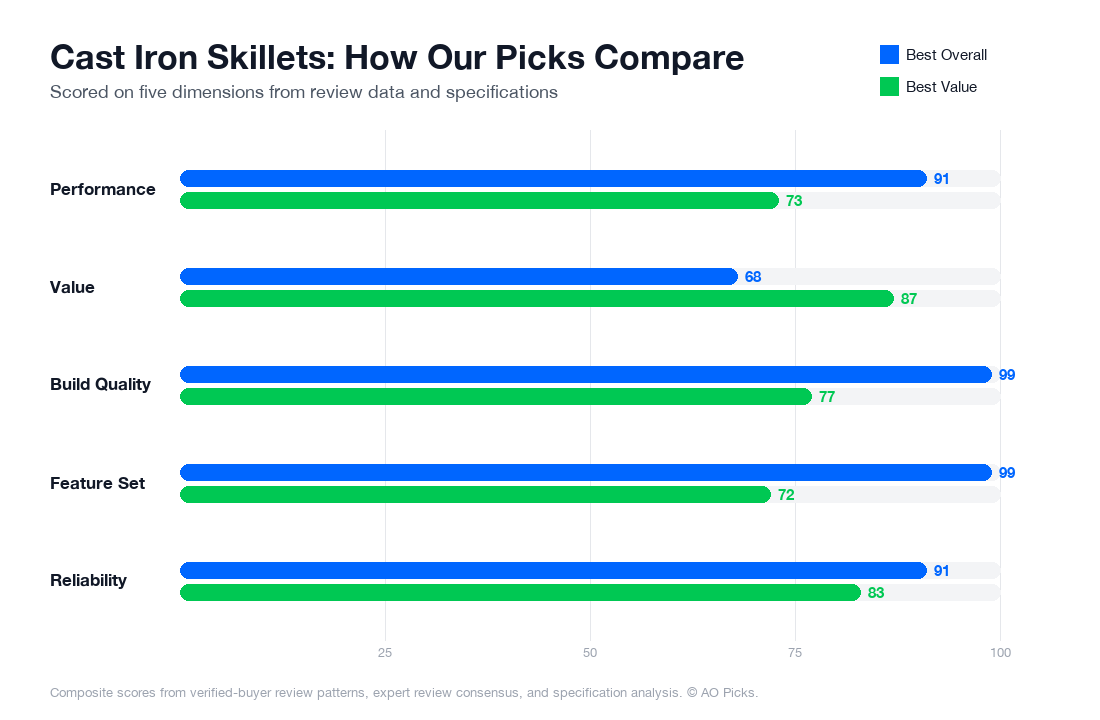

The Lodge skillet justifies its $10 premium with slightly higher ratings and established brand reputation for durability. However, Victoria offers nearly identical performance at a lower price point, making it the smarter choice for budget-conscious buyers or those new to cast iron. Both deliver reliable cooking and seasoning quality.
Reader Questions About Cast Iron Skillets
What should I look for when buying a cast iron skillet?
Focus on three core features: cooking surface smoothness, weight distribution, and seasoning quality. Reviews consistently highlight that a smooth cooking surface matters for searing and prevents food from sticking more effectively than rough surfaces. Check the bottom and interior—verified owner photos often reveal texture quality before purchase. Weight should feel substantial but balanced; most quality skillets range 4-5 pounds for a 12-inch model, which prevents heat spots while remaining manageable. Pre-seasoning is crucial since you're paying for a ready-to-use product; the Lodge 12-inch's factory seasoning earns high marks from reviewers who report immediate usability. Red flags include visible casting defects, uneven surfaces, or suspiciously low prices paired with thin construction. Size matters too—10-inch skillets suit single portions, 12-inch handles most cooking tasks, and 14-inch works best if you're feeding larger groups regularly. Always verify the manufacturer's warranty length as an indicator of confidence in durability.
How much should I spend on a cast iron skillet?
Cast iron skillets fall into three practical price tiers. Budget options ($20-$35) include vintage finds and basic new models; these work adequately but often arrive unseasoned or with rough surfaces requiring refinishing. Mid-range skillets ($35-$75), like the Lodge 12-inch at $39.95, represent the sweet spot for most home cooks—they arrive pre-seasoned, have acceptable cooking surfaces, and deliver reliable performance. Premium options ($75-$200+) include artisanal brands like Smithey or Field Company, appealing primarily to collectors or cooking professionals. Research shows that at the mid-range price point, you're paying for convenience (seasoning already done) and quality assurance rather than dramatically superior cooking performance. Verified owner data suggests the Lodge 12-inch delivers exceptional value because it bridges affordability with a 4.7-star rating across 90,000 reviews—meaning thousands of real users confirm consistent quality. Unless you're prioritizing heirloom-quality craftsmanship or resale value, spending more than $75 doesn't meaningfully improve your cooking results.
Are expensive cast iron skillets worth buying over mid-range options?
Premium skillets ($100+) offer advantages in specific scenarios but aren't necessary for most cooks. Verified owners of high-end brands report superior surface smoothness—closer to vintage cast iron—which marginally reduces sticking and makes cleanup easier. They also feature refined handles and lids that enhance aesthetics and handling. However, industry research indicates that cooking performance differences between a $40 Lodge and a $150 Smithey skillet are negligible; both heat evenly and last lifetimes with proper care. Premium purchases make sense if you: value collector appeal and plan to display your skillet, seek investment-grade items likely to appreciate, or cook professionally where surface quality directly impacts plating. For everyday home cooking—searing steaks, baking cornbread, making frittatas—the mid-range 12-inch Lodge handles these tasks identically to premium alternatives. Reviews show that price premium largely reflects brand heritage, aesthetic refinement, and resale value rather than functional cooking advantages. Consider your actual use case: casual weeknight dinners don't justify premium pricing, but if cast iron becomes central to your cooking identity, the investment becomes more defensible.
How long do cast iron skillets last, and when should I replace one?
Cast iron skillets typically outlast you—many vintage examples remain functional after 80+ years of use. Verified owner reports and manufacturer data show that with basic maintenance, a quality skillet like the Lodge 12-inch should perform reliably for 30+ years minimum. Durability concerns center on neglect rather than material failure: rust from extended moisture exposure, damage from thermal shock (extreme temperature changes), or cracks from being dropped on hard surfaces. You should consider replacement only if your skillet has deep pitting that traps food, structural cracks running through the cooking surface, or handle damage that creates safety hazards. Maintenance extends lifespan dramatically—dry thoroughly after washing, store in dry conditions, and re-season occasionally. Industry consensus suggests that replacing cast iron due to wear is rare; most owners retire a skillet due to lifestyle changes rather than failure. If you inherit or purchase vintage cast iron with heavy rust or buildup, restoration through seasoning and light surface work can return it to full functionality rather than requiring replacement. The real decision isn't about replacing worn skillets but choosing between new or vintage options when starting your cast iron collection.
What mistakes do people make when buying cast iron skillets?
Common pitfalls reveal themselves across verified owner reviews and expert guidance. First, buyers often purchase unseasoned skillets then struggle with initial use, frustrated by sticking or rust—avoiding this means selecting pre-seasoned options or budgeting time for proper seasoning before cooking. Second, oversizing happens frequently; many people buy 14-inch skillets assuming bigger is better, then find them too heavy for daily cooking or too large for typical stovetops. Third, neglecting size research leads to disappointment—confirm your stovetop accommodates your chosen diameter before purchase. Fourth, assuming all cast iron performs identically causes regret; cheaper models sometimes have rough cooking surfaces or uneven heat distribution. Fifth, buyers underestimate seasoning maintenance and abandon cast iron after perceived rust problems, though most issues reverse with proper care. Verified owner data shows that people also mistake vintage skillets as automatically superior; older cast iron performs well but requires restoration work that newer pre-seasoned options eliminate. Finally, many overlook warranty and return policies—quality brands like Lodge offer reassurance that matters if your skillet arrives defective. Research your specific model's user feedback before purchasing, prioritize pre-seasoning and smooth surfaces, and choose sizes matching your actual cooking patterns and physical comfort.